


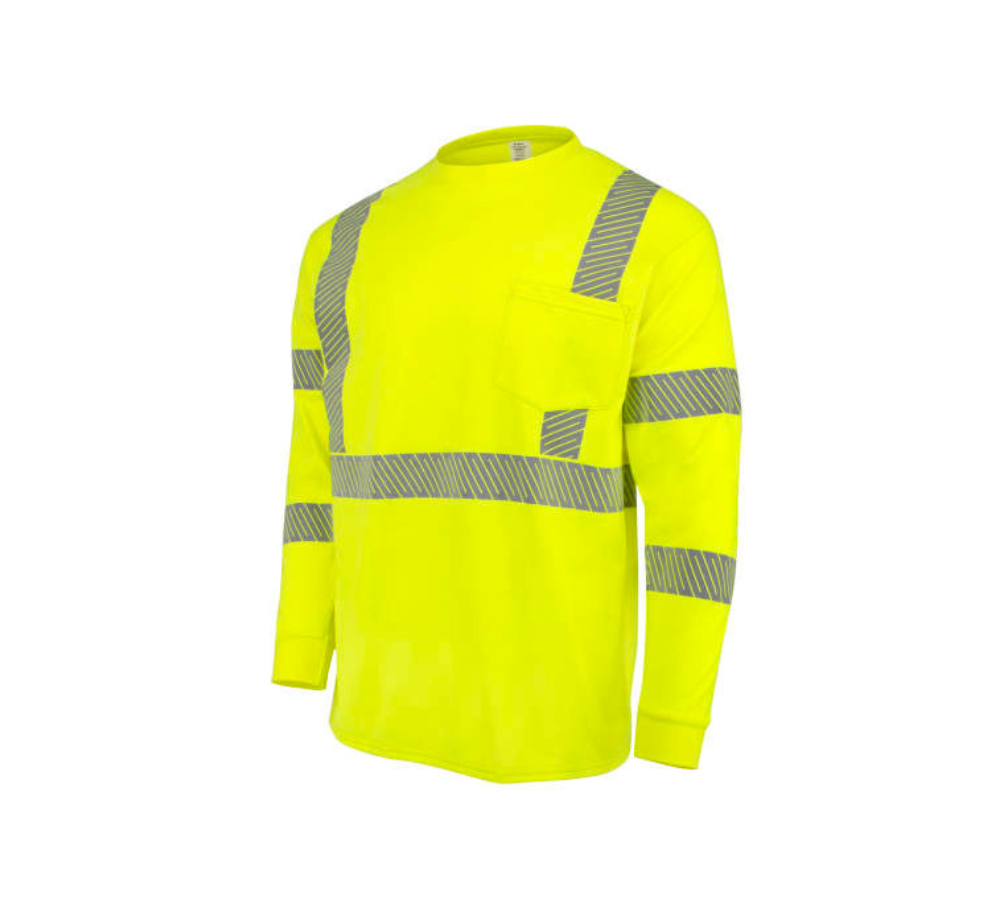

Material:
– Main fabric: Usually 6.25oz – 7oz 100% FR-treated cotton knit or modacrylic blend. Common blends:
– 95% cotton / 5% spandex — FR treated, for stretch– Colorway: Hi-Vis Yellow/Green
– 55% modacrylic / 45% cotton — inherent FR, won’t wash out
– 50% modacrylic / 40% tencel / 10% aramid — lightweight, moisture-wicking
– FR type: Most budget versions are treated cotton. Higher-end are inherent FR modacrylic blends that last the life of the garment.
– Reflective tape: 2″ FR-rated segmented silver tape with diagonal pattern. Segmented = more breathable/flexible than solid tape. Won’t melt or drip.
– Thread: Nomex FR thread on all seams.
Features:
– Crew neck: Rib-knit collar, no buttons or zippers to conduct heat
– Left chest pocket: Single patch pocket — convenient for pens/notepad
– Long sleeves: Full arm coverage required for NFPA 70E CAT compliance
– Rib-knit cuffs: Keeps sleeves from riding up and exposing skin
– Hi-vis striping: Vertical stripes over shoulders + horizontal around torso + double bands on sleeves = ANSI/ISEA 107 Class 3 when worn alone
– Tagless collar: Most FR tees print the tag info on the neck to avoid melting plastic tags
Stuff:
1. Base layer vs. outer layer: Can be worn alone if the CAT rating matches your hazard. Often used as base layer under FR coveralls/shirt for moisture-wicking.
2. Not fireproof: Gives you 2-3 seconds to escape. Cotton/modacrylic chars instead of melting to skin.
3. Breathability: Segmented tape + knit fabric makes this way cooler than woven FR shirts. Used for summer/hot work.
4. Care: Wash in mild detergent only. No bleach, no fabric softener, no DEET bug spray. Treated cotton versions lose protection after ∼25-50 industrial washes. Inherent FR lasts the life of the shirt.
Use case: Utilities, roadwork, oil & gas in summer. Class 3 means you don’t need a vest over it for highway visibility.

Reviews
There are no reviews yet.