

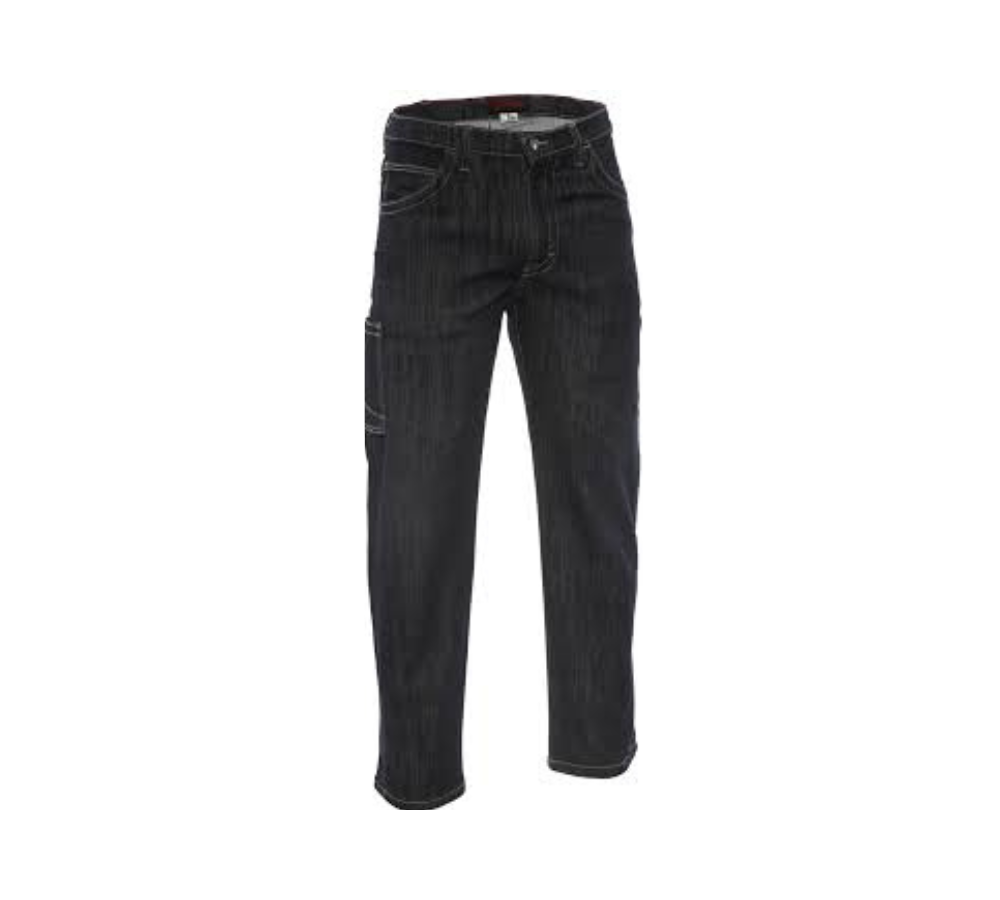
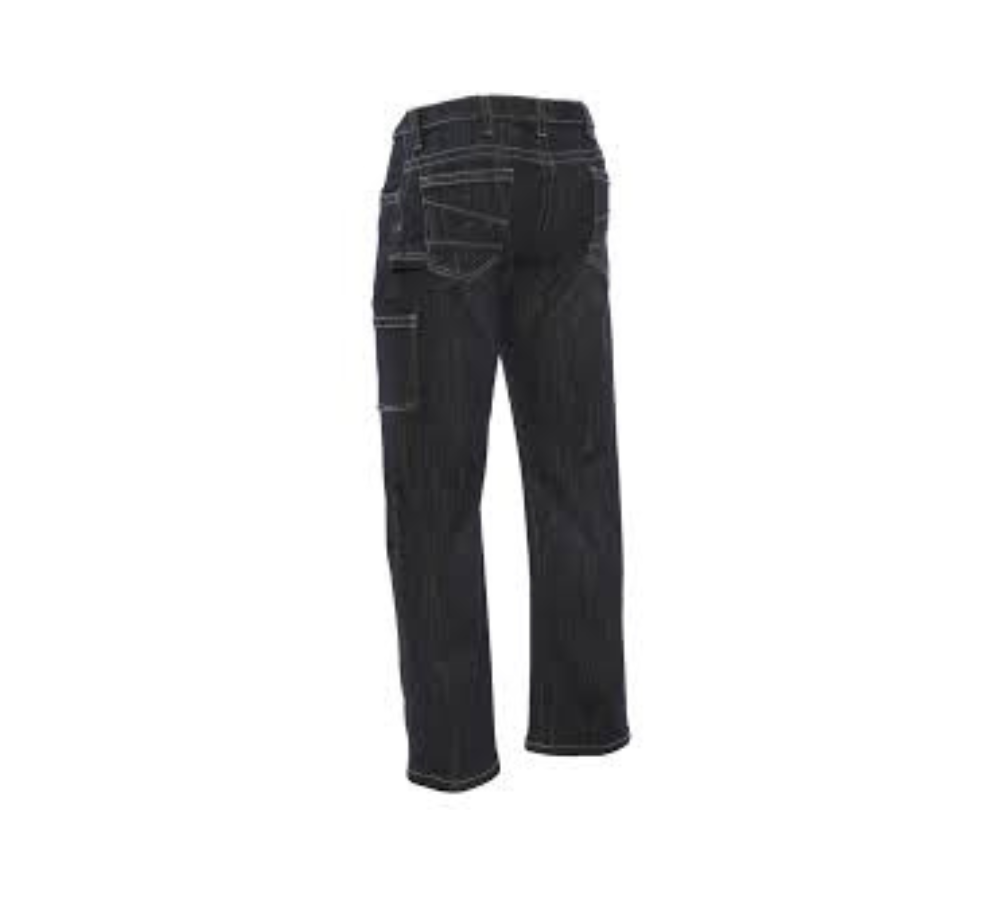

-Material
1 Base fabric: Usually 100% cotton denim, but treated with FR chemicals. Or 88% cotton / 12% nylon blends — cotton for comfort, nylon for durability.
2 Inherent FR fabrics: More expensive types use Modacrylic, Aramid (Nomex/Kevlar), or FR Rayon blends. These are flame resistant by nature, not just chemically treated.
3 Weight: Typically 10oz – 14.5oz denim — heavier than normal jeans for better protection.
4 Common brands: Ariat, Wrangler Riggs FR, Carhartt FR, Bulwark. They all meet NFPA 2112 or NFPA 70E standards for arc flash / flash fire.
-How they work
1 Treated FR: Cotton is soaked in flame-retardant chemicals. It won’t ignite and will self-extinguish. But protection reduces after ∼50-100 washes.
2 Inherent FR: Fibers themselves don’t burn. Protection lasts the life of the garment. Costs 2x-3x more.
-Features
1 Labels: “CAT 2”, “ATPV 8+ cal/cm²”, “NFPA 2112” tags — these show the protection level
2 Hardware: Plastic buttons/zippers replaced with brass or covered metal so they don’t melt
3 Stitching: FR thread — usually Nomex thread, so seams don’t fail in fire
4 Fit: Pre-washed, relaxed fit — tight FR jeans are unsafe because air gap = insulation
Pockets: Often reinforced, sometimes with flap closures
-Stuff
1 No melting: FR jeans won’t melt/drip onto skin like polyester would. That’s the key safety benefit.
2 Not fireproof: They buy you 3-4 seconds to escape flash fire. They’ll still char.
3 Washing: No bleach, fabric softener, or starch — it kills FR treatment. Wash in mild detergent only.
4 Layering: FR jeans alone won’t protect you. Must be part of a full FR system with shirt, etc.
Reviews
There are no reviews yet.